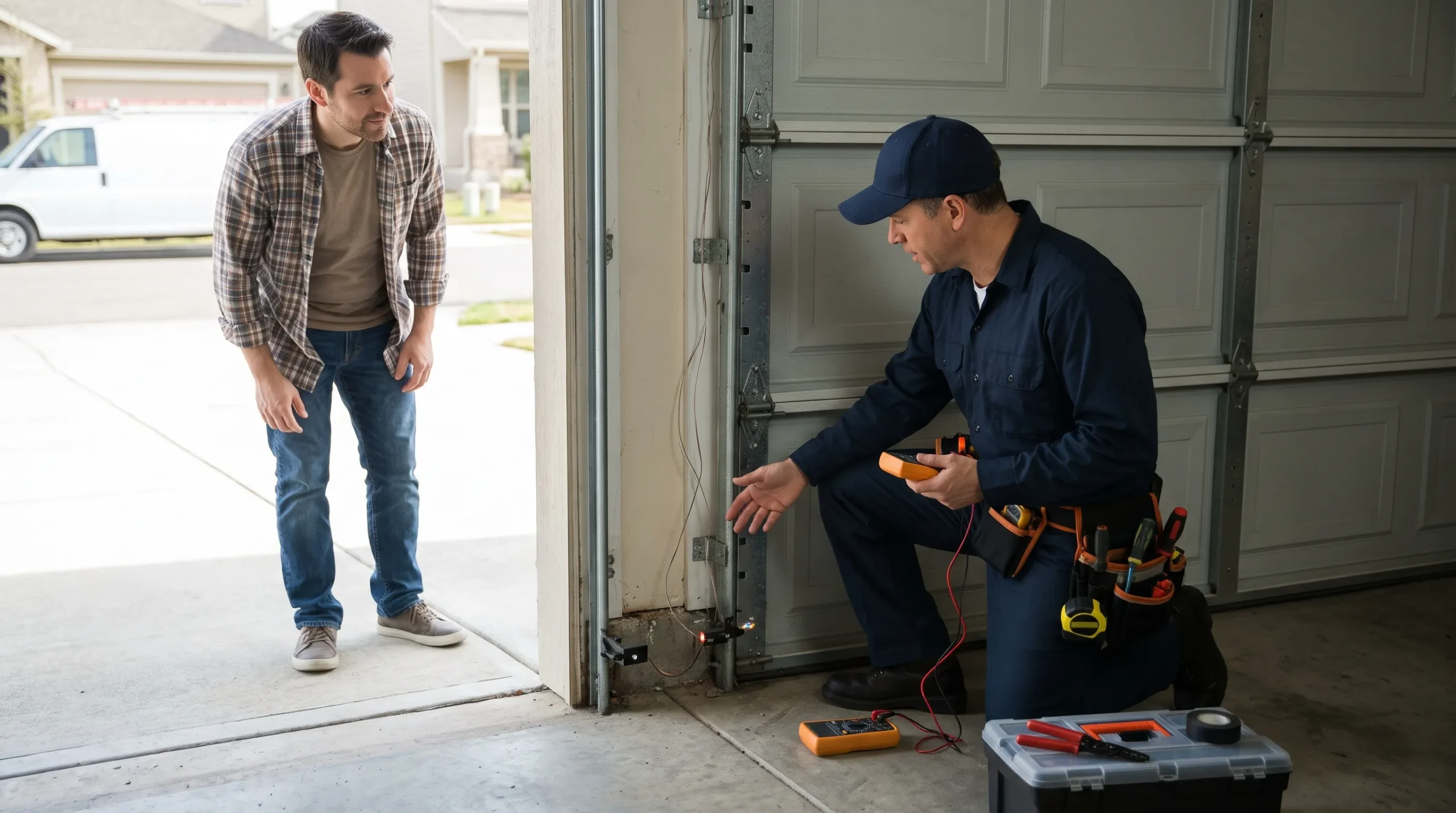
Wiring damage, repeated misalignment despite adjustment, and opener malfunctions unrelated to alignment all signal a job beyond basic troubleshooting. Trained hands are worth involving when a garage door service call is needed to address issues no amount of cleaning or tightening can fix.
Some problems resolve with a cleaned lens or a tightened bracket, while others trace back to deeper issues hidden beneath the surface symptom. This guide explains which signs point directly to professional help and what typically happens once a technician arrives to inspect the system.
Key Takeaways
- Rodent damage or corrosion usually requires professional repair.
- Misalignment returning after multiple attempts often signals a deeper issue.
- Opener malfunctions unrelated to alignment point to electrical problems.
- Physical damage to the housing or brackets often exceeds hand adjustment.
- Inconsistent door behavior raises real safety concerns that should be addressed quickly.
Signs a Garage Door Sensor Issue Needs Professional Attention
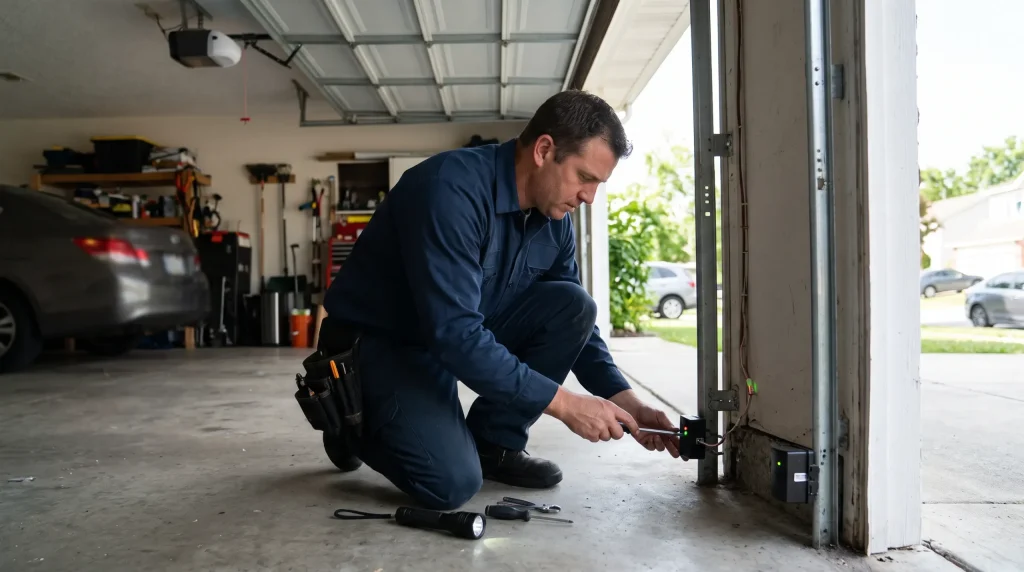
A problem a homeowner can fix and one that needs a professional often look identical at first, even to someone who has already tried the basics.
Sign | Why Basic Fixes Won’t Help | What a Professional Checks |
Wiring Damage | Damaged insulation can’t be repaired by cleaning or adjusting | Full wiring inspection from sensor to opener unit |
Repeated Misalignment | A bracket that won’t hold suggests a structural issue | Mounting hardware, wall condition, and bracket integrity |
Opener Malfunction | Electrical issues sit beyond sensor-level troubleshooting | Logic board, wiring, and internal opener components |
Physical Damage | Cracked housing or bent brackets need replacement, not adjustment | Extent of damage and whether parts need replacing |
Inconsistent Behavior | Unpredictable reversal points to a system-wide problem | Full safety mechanism, from sensors through the opener |
The specific symptom usually makes clear whether the situation genuinely calls for a professional or another attempt at a basic fix first.
Wiring Damage Beyond a Simple Repair
Damaged wiring interrupts the connection between sensors, no matter how well the brackets are positioned or how clean the lenses look.
Look for these specific wiring problems:
- Chewed insulation from rodents nesting near the wiring.
- Corrosion visible on connectors exposed to moisture over time.
- Wires pinched or crushed during a previous repair attempt.
- Bare wire exposed anywhere along the visible run.
- Intermittent connection that comes and goes with movement.
Wiring problems at this level typically need garage door cable repair, since damaged connectors usually don’t hold up with just a quick patch.
Repeated Misalignment After Multiple Adjustments
A bracket that drifts back out of position after several careful adjustments points to something more than a simple alignment issue.
Watch for these signs of a recurring problem:
- Alignment lost again within days of a successful adjustment.
- The bracket loosens immediately after you tighten it correctly.
- Wall material crumbling or failing to hold mounting screws.
- Vibration from the opener itself worsening with each cycle.
- Multiple attempts producing the same short-lived result.
To confirm you’ve tried every adjustment correctly before assuming a bigger issue, read our guide on Basic Fixes for Misaligned Garage Door Sensors, which walks through each step in the proper order.
Opener Logic Board or Electrical Malfunction
Electrical problems inside the opener unit itself sit well beyond what sensor cleaning or bracket adjustment can address.
Recognize these opener-specific warning signs:
- Error codes appearing that don’t match a standard alignment issue.
- Opener failing to respond at all despite confirmed power.
- Both the remote and wall button failing simultaneously.
- Unusual sounds coming from the opener during operation.
- Lights on the opener unit behaving erratically or inconsistently.
A malfunction at this level usually calls for garage door opener repair, since the problem sits inside the unit rather than at the sensor connection.
Physical Damage to the Sensor Housing or Brackets
Cracked housing or a severely bent bracket often can’t be corrected through hand adjustment alone, no matter how carefully you reposition it.
Assess the extent of physical damage using these checks:
- Housing cracked or split from a direct impact.
- Bracket bent at an angle that resists straightening by hand.
- Mounting holes stripped or enlarged beyond secure use.
- Lens scratched deeply enough to distort the beam.
- Wall material behind the bracket damaged or crumbling.
To understand how impact and other events can cause this level of damage over time, read our guide on Common Causes of Misaligned Garage Door Sensors, which breaks down each contributing factor in detail.
Safety Concerns From Inconsistent Door Behavior
Unpredictable door movement raises genuine safety concerns that go well beyond a simple inconvenience, especially in a household with children or pets nearby.
Treat these behaviors as urgent safety signals:
- Door reversing at different points with no clear pattern.
- Door failing to stop or reverse when something blocks its path.
- Reliance on manual override becoming a daily necessity.
- Door movement feeling unpredictable during normal operation.
- Safety mechanism failing to respond consistently across attempts.
To confirm whether this behavior points specifically back to alignment or to something else entirely, read our guide on How to Tell if Garage Door Sensors Are Aligned, which covers the exact signs to check first.
What Happens During a Professional Sensor Service Call
A professional visit addresses the full system, not just a single visible symptom, starting with a complete diagnostic before any repair begins.
Expect these steps during a typical service call:
- A full inspection covering sensors, wiring, brackets, and the opener.
- Diagnostic testing to isolate the exact source of the malfunction.
- Install replacement parts for any damaged hardware or wiring.
- Precise realignment completed using proper calibration equipment.
- Verification testing performed before the technician leaves the property.
A thorough garage door repair visit resolves the underlying issue instead of treating only the symptom that prompted the original call.
Some Sensor Problems Need More Than a Homeowner’s Toolkit
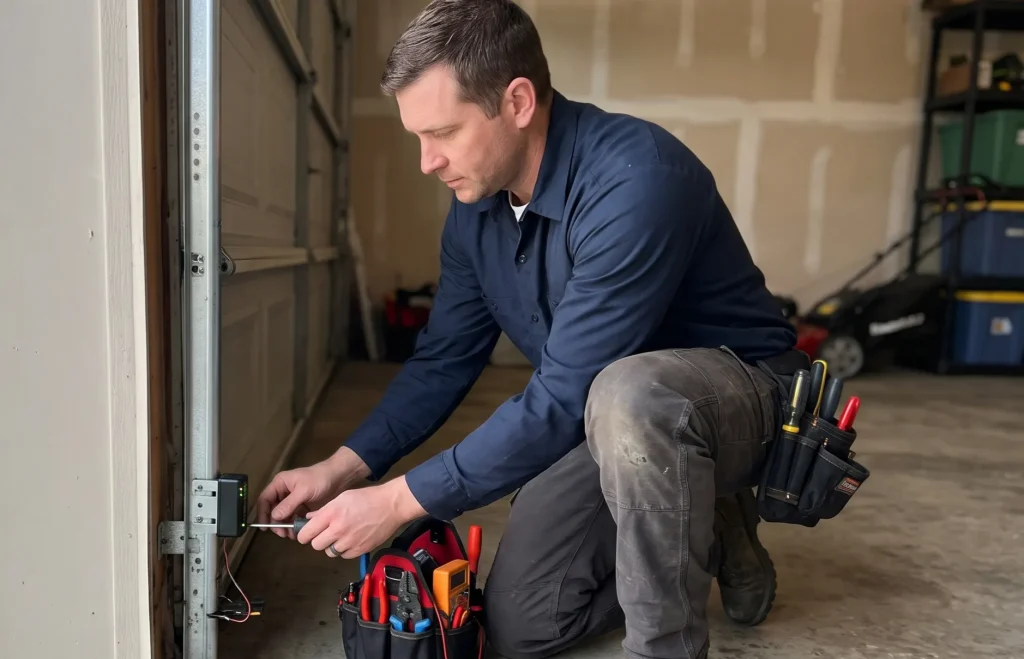
Specific warning signs, from wiring damage to inconsistent door behavior, point clearly toward a problem beyond basic troubleshooting and everyday tools. Recognizing these signs early prevents a manageable issue from becoming a bigger safety concern or a far more expensive repair down the line.
C&C Garage Door and Opener LLC provides Jefferson, Georgia homeowners with thorough sensor diagnostics whenever a problem outlasts basic troubleshooting and a few careful adjustments. Contact us or give us a call today, and let our team confirm exactly what the system needs to work safely again.